Advanced Cataract Care

Expert Cataract Surgeons in Southern Oregon

Our fellowship-trained eye doctors provide advanced cataract surgery in Medford, Ashland, and the Rogue Valley. Using the latest technology and modern techniques, we offer personalized treatment plans designed to restore clear vision and reduce dependence on glasses.

Understanding Cataracts

What are Cataracts?

The lens is one of the most important parts of our eyes. It’s what focuses light into our eyes and allows us to see. As we age, or in some cases if the eye is injured, this lens can start to become clouded and discolored due to fibers and proteins in the lens breaking down and clumping together.

As this clumping gets worse, it begins to affect the amount of light that is able to pass through the lens, in turn reducing the clarity of our vision. At first, the effect can be negligible, only clouding certain parts of our vision. Over time, as the clouding gets worse, it will impact our vision more and more, causing blurred vision, difficulty seeing in low light, and even muted colors.

Cataracts are one of the most common eye conditions. Most everyone will develop them at some point in their life.

Generally, cataracts will start to develop in your 40s, though at this stage they will be barely noticeable. It won’t be until your 50s or 60s before these cataracts start to worsen and really start to impact your vision.

However, certain factors can accelerate the development of cataracts. Diabetes, steroid use, injuries, metabolic problems, or certain medications can all speed up the development of cataracts. In rare cases, someone can be born with cataracts or develop them early in childhood.

During the early stages of cataracts, treatment options are more limited because the impact on your vision isn’t as serious. New, stronger glasses might be prescribed, or you may be recommended to use better lighting when reading to help you see better.

Once cataracts begin to negatively affect your day-to-day life, it may be time to consider cataract surgery. That is exactly what our experienced doctors here at Cataract & Laser Institute are here to provide.

Your Surgery Experience

What to Expect with Cataract Surgery

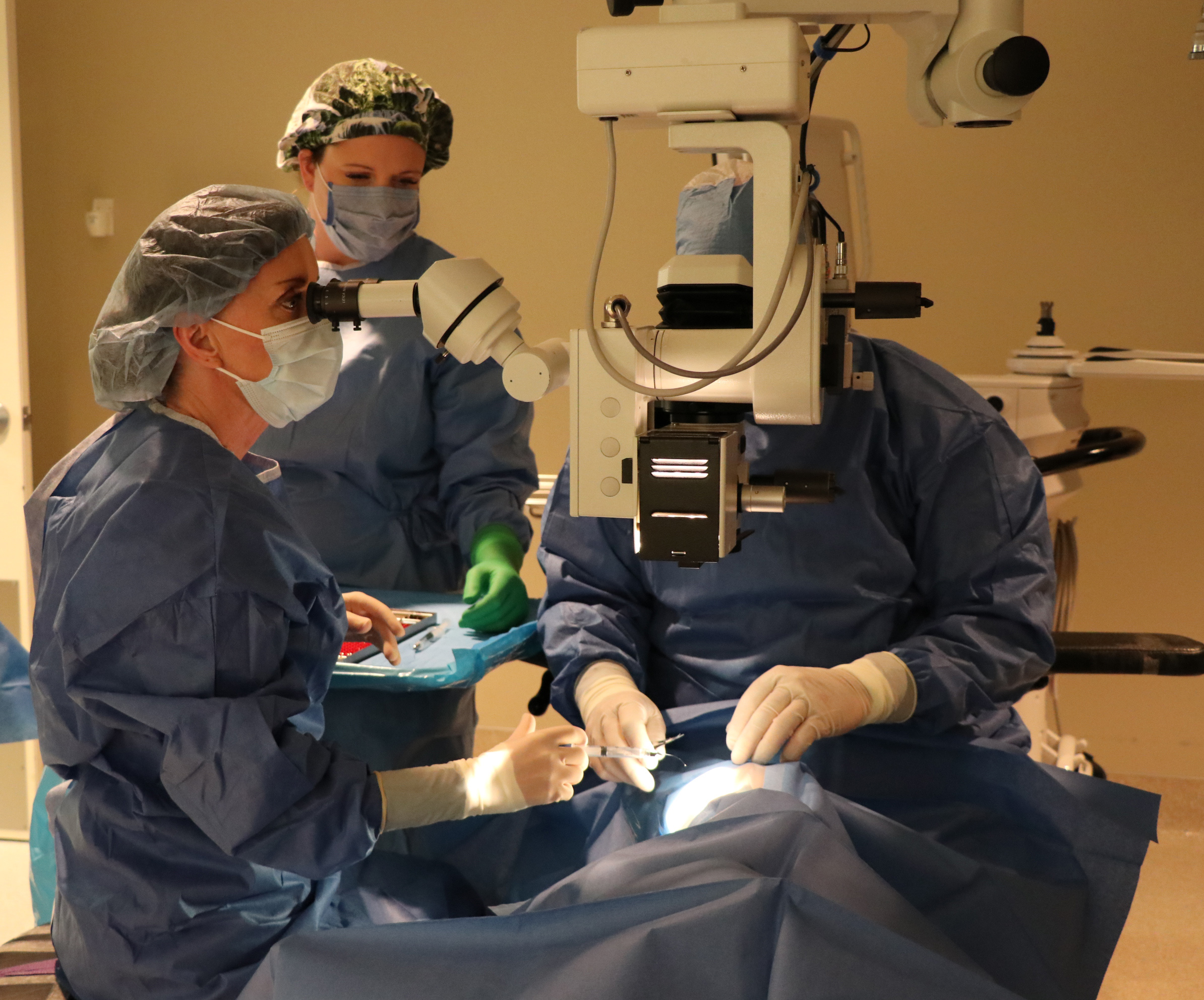
It’s normal to feel anxious about eye surgery, but cataract surgery is one of the safest and most effective procedures performed worldwide.

At our state-of-the-art eye surgery center in Southern Oregon, we offer a gentle, “no shot, no stitch, no patch” procedure.

Our cataract surgeons guide you through every step—from your first consultation to your follow-up visits—ensuring a smooth experience and excellent vision outcomes.

During surgery, you will be monitored by a dedicated anesthesia provider and cared for by a compassionate nursing team. Sedation is given through an IV to keep you comfortable and relaxed throughout the procedure.

Comfort-Focused Care

No Shot. No Stitch. No Patch.

Our surgical team is focused on making your experience as comfortable and straightforward as possible.

You will have:

  • A dedicated anesthesia provider
  • IV sedation for comfort
  • A compassionate nursing team
  • Guidance from consultation through follow-up

Step One

What happens before cataract surgery?

At your first visit with your cataract surgeon in Medford, your eyes will be dilated and carefully examined. Specialized tests and measurements help determine if surgery is necessary and which intraocular lens implant (IOL) is right for you.

You will have the opportunity to discuss your vision goals—such as reducing your need for reading glasses or correcting astigmatism—with your surgeon.

If both eyes require treatment, cataract surgery is performed one eye at a time. Most patients wait about 3–4 weeks between surgeries, though those choosing a Light Adjustable Lens implant may have surgeries closer together.

Step Two

What happens during cataract surgery?

Cataract surgery typically lasts 10–20 minutes per eye. After numbing drops are applied, your surgeon makes a tiny incision, about 2 mm, to remove the cloudy lens using phacoemulsification, an ultrasound technique that breaks up and removes the cataract.

A new, clear intraocular lens is then implanted. This lens remains permanently in the eye and requires no care.

Personalized Vision

Types of Lens Implants

We offer both standard and advanced lens options. Your cataract specialist will help determine which option best fits your lifestyle, visual goals, and medical history.

Standard Monofocal Lens

Provides one focal point; glasses are usually needed for near or distance vision.

Multifocal Intraocular Lens (MFIOL)

Offers clear vision at distance, intermediate, and near ranges. Some patients may notice halos around lights.

Extended Depth of Focus (EDOF) Lens

Provides a continuous range of vision with less risk of night halos; glasses may be needed for prolonged reading.

Toric Lens Implant

Corrects astigmatism for sharper distance vision.

Aphthera IC-8 Lens

Designed for irregular astigmatism; placed only in one eye.

Light Adjustable Lens (LAL)

Allows your vision prescription to be customized after surgery using UV light treatment.

Our cataract specialists will recommend the best lens choice based on your lifestyle, visual needs, and medical history.

Explore Intraocular Lens Options

Why Cataract & Laser Institute?

Why Choose Us for Cataract Surgery in Medford?

  • Fellowship-trained cataract and refractive surgeons
  • Latest technology, including premium lens implants
  • Personalized vision plans tailored to your goals
  • Caring, experienced surgical team and anesthesia support
  • Convenient follow-up care in Southern Oregon

Common Questions

Cataract Surgery FAQs