
Functional Eyelid Surgery

Restoring Eyelid Function, Comfort & Vision

Schedule an Eyelid Evaluation

Improving Vision and Restoring Healthy Eyelid Function

Eyelid surgery is often recommended to correct eyelid malpositions, helping to restore proper alignment and function. Malpositions can be caused by factors such as aging, weakening of eyelid muscles or tendons, scarring, previous surgeries, trauma, or neurologic conditions.

Abnormal eyelid positioning may cause eye irritation, exposure, tearing, infection, impaired vision, and cosmetic concerns. These symptoms can become worse over time, impacting both comfort and quality of life.
Functional vs. Cosmetic Eyelid Surgery

Functional and cosmetic eyelid surgery can sometimes involve similar areas of the eyelid, but the goals are different.

Functional eyelid surgery is performed when eyelid position, excess tissue, or another abnormality interferes with vision, comfort, or normal eye function.

Cosmetic eyelid surgery is performed primarily to improve appearance.

When Should You Consider an Evaluation?

  • Your eyelids interfere with peripheral or upper vision
  • You frequently lift your brows to see more clearly
  • Your eyelids turn inward or outward
  • You experience persistent irritation, tearing, or redness
  • You have a new or changing eyelid lesion
  • An eyelid problem is affecting your comfort or daily activities

Functional Eyelid Conditions We Treat

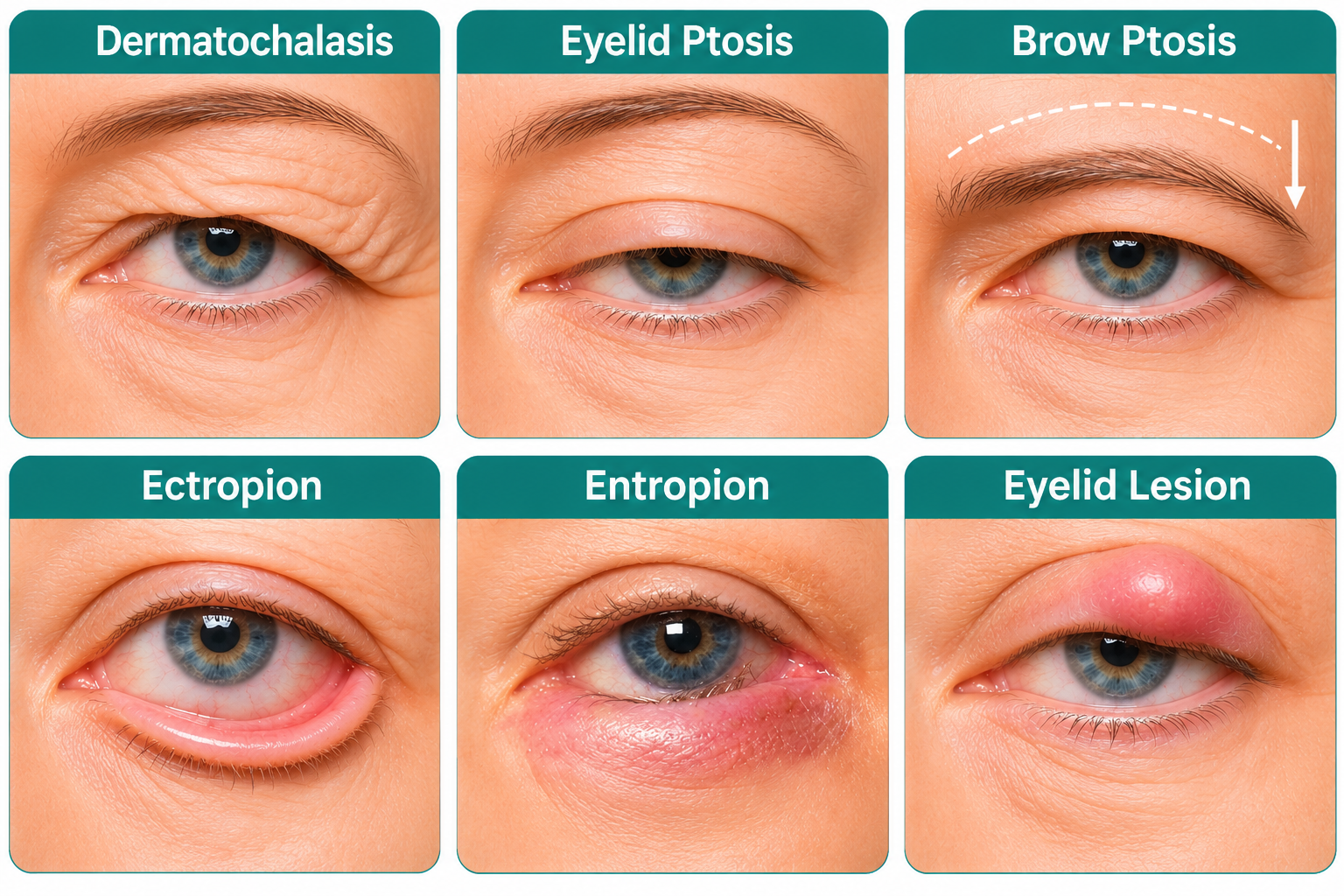
Dermatochalasis

Excess Eyelid Skin

Dermatochalasis is a condition characterized by excess upper eyelid skin, often leading to a hooded appearance, obstruction of vision, and brow ache.

Treatment

Dermatochalasis is treated with blepharoplasty, a surgical procedure that removes the excess skin and restores a more youthful eyelid contour while improving the patient’s field of vision.

Eyelid Ptosis

Droopy Eyelid

Ptosis refers to drooping of the upper eyelid, often caused by weakened or stretched muscles. The drooping lid may interfere with vision and can require surgery to restore its normal position.

Treatment

Ptosis surgery involves tightening the muscles responsible for eyelid elevation. Ptosis repair can be approached either externally with an external levator advancement or internally with a Müller’s muscle-conjunctival resection, depending on the severity of the ptosis.

Brow Ptosis

Droopy Eyebrow

Brow ptosis is a condition in which the eyebrows droop below their normal position, potentially causing impaired peripheral vision.

Treatment

Different brow lift techniques can be used to elevate the eyebrows. Our preferred approach is direct browplasty, which uses deep wrinkles just above the eyebrows to camouflage the incision while removing a strip of skin and tissue.

Ectropion

Eyelid Turns Outward

Ectropion occurs when the eyelid margin turns outward, exposing the surface of the eye and potentially causing irritation, tearing, or redness.

Treatment

Ectropion is typically repaired with a lateral tarsal strip procedure, which tightens the eyelid margin horizontally and brings the eyelid back to its normal position.

Entropion

Eyelid Turns Inward

Entropion occurs when the eyelid margin turns inward, causing the eyelashes and eyelid to rub against the surface of the eye. This may lead to a foreign body sensation, tearing, redness, and irritation.

Treatment

This condition is initially repaired with a Quickert procedure, which uses everting sutures to pull the eyelid back to its normal position.

Eyelid Lesion Removal

Evaluation & Biopsy of Eyelid Growths

Certain eyelid lesions require removal to diagnose abnormal growths or to alleviate symptoms of irritation.

Treatment

A biopsy of the lesion allows for a precise diagnosis and helps guide appropriate management and any additional treatment that may be needed.

Personalized Treatment for Your Eyelid Condition

The best surgical approach depends on the type of eyelid malposition, the underlying cause, the severity of your symptoms, and how the condition is affecting your vision and eye health. A comprehensive evaluation can help determine the most appropriate treatment.

Schedule a Functional Eyelid Evaluation

Call 541-779-2020
  or  
Request an Appointment